


📫 Subscribe | 🗣️ Hire us to speak | 🎓 Online Courses | 📅 Events
Latest Gen AI News
OpenAI claims to have solved the 90-year-old Navier-Stokes math problem in 88 hours
A week ago, OpenAI announced that an internal model solved the Navier–Stokes problem, a decades-old mathematical puzzle about fluid dynamics, in just 88 hours using ten thousand of coordinated agents. This marks the first solution of any of the seven Millennium Prize math problems, a group of the most difficult open problems in mathematics identified by the Clay Mathematics Institute in 2000 (with each problem coming with a million dollar bounty for its solution). However, some mathematicians have raised concerns about whether the system relied on information about the progress of several researchers who were already close to finding a solution, or possibly even training data from these researchers when they used OpenAI’s Codex coding platform in their work. The Clay Institute has not yet verified or commented on the proposed solution.
AI CEOs say they need to slow the pace of development. But will they?
Over the weekend, Anthropic CEO Dario Amodei released a proposal advocating for a controlled slowdown in AI development, which was quickly supported by major industry leaders including Sam Altman (OpenAI), Demis Hassabis (Google), and Elon Musk (xAI). Amodei’s plan focuses on giving independent evaluators employee-level access to assess safety, alongside building international AI safety standards and coordinating security issues across nations. However, critics and policymakers express skepticism about this proposal, warning that self-regulation could amount to regulatory capture, serving the interests of the AI industry instead of the public, while political leaders in the US are prioritizing global competition over slowing down (see below).
Trump says no need for more AI regulation, slams Anthropic CEO Dario Amodei
After Amodei’s proposal was released this past weekend, on Monday President Donald Trump strongly criticized calls for artificial intelligence regulation and data center pushback, dismissing existential AI safety fears as—you guessed it!—a “hoax” and a “scam” on Truth Social. Trump warned that imposing strict regulations on the industry would handicap American innovation and cause the U.S. to lose its technological lead to China.
Support our sponsor:
Transform Your Technology into a Competitive Advantage

Lean TECHniques works alongside Midwest companies to leverage technology for business impact. Through advisory, coaching, and embedded delivery, Lean TECHniques helps organizations develop high-performing teams, create environments that fuel innovation, and deliver best-in-class customer experiences. Core areas of expertise include software, cloud, artificial intelligence, product management, and technology leadership.
Upcoming Innovation Profs events
Microsoft Copilot Virtual Workshop: Give us three hours and we will get you up to speed on how to get the most value out of Microsoft Copilot. This workshop runs 9 a.m. to noon on Sept. 16. Sign up here.
Fall AI Lunch Club
Innovation Profs’ Fall 2026 AI Lunch Club will feature four free one-hour virtual events.
Sept. 30: Get More Value from Microsoft Copilot
Oct. 7: How to use AI as a Design Tool
Oct. 14: Skills, Plugins and Connectors
Oct. 21: AI’s Rapid Ascent: Do we Need to be Worried
These events are made possible through a sponsorship from Drake University’s Bucksbaum Lectureship in Business. Award-winning journalists Karen Hao and Nicholas Thompson will deliver this year’s AI-focused lecture, Decoding America’s Tech Moment, Oct. 21 at the Drake University Knapp Center (and live online). The event is free and open to the public.
Quick Hits





Tool of the Week: Meta Muse
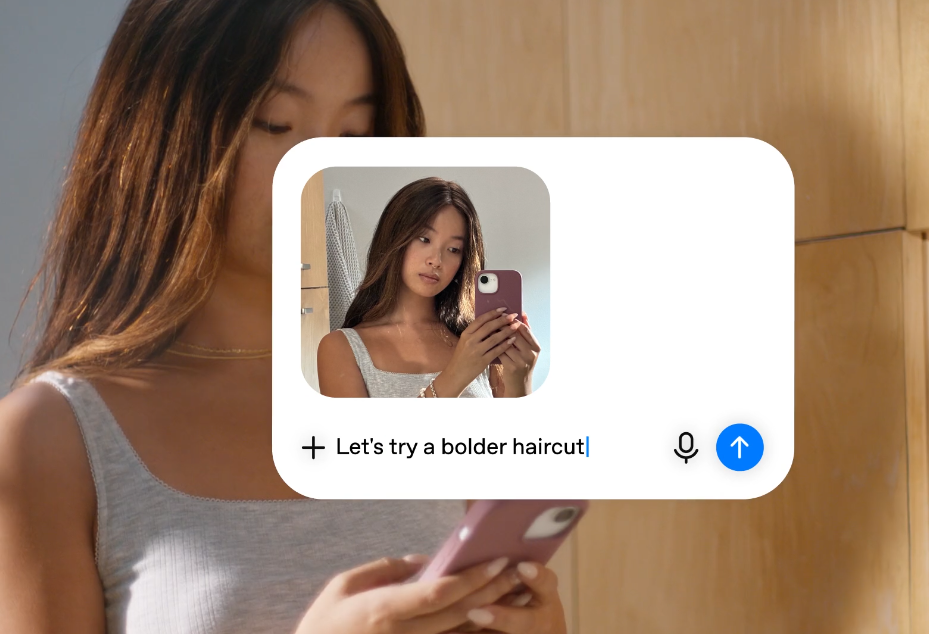
Meta just launched Muse, an agent designed to take tasks off your plate. Muse can book a table, plan a trip, watch a price and buy when it drops, all from its own cloud computer. Users can talk to Muse through its app or text it on WhatsApp. It plugs into Gmail, Spotify, Ticketmaster, and OpenTable, and if there's no existing connection, it can build its own. It navigates websites and fills out forms like a person would, with Stripe built in for anything that needs a payment. Come back for our Friday newsletter to hear about how Professor Snider is using Muse to look for items on Facebook Marketplace, keep up with his fantasy football teams, read his emails and more.
AI-generated image of the week
I (Professor Snider) tested ChatGPT’s new image model to see how well it can restore old photos. This is a photo I use when teaching Photoshop to Drake SJMC students. We use the spot healing brush tool to remove the dust spots, but we don’t restore the photos nearly as well as ChatGPT can do with one simple prompt.

Prompt: Restore this old photo while preserving the exact people, faces, expressions, clothing, objects, and composition. Remove scratches, dust, stains, fading, discoloration, blur, and age-related damage. Recover natural detail without altering identities or inventing features.What we found
Suno launched v6 this week. It’s the first model Suno has built on licensed music, from partners like Warner, BMG, and Believe, instead of whatever it scraped to train earlier versions. That's a bit step forward for AI music tools. Suno's been sued by pretty much everyone – Sony, Universal, artists like Jason Isbell – and just admitted a day before this launch that it trained older models on YouTube audio.
AI term of the week
Multimodal: An AI model's ability to work with more than just text, including images, audio, video, even code, all within the same conversation. You can hand a multimodal model a photo of your whiteboard and ask it to turn the notes into an outline, or describe a chart and have it explain the trend, or have a spoken conversation with it out loud.
While most people's mental model of AI is still “type a question, get a text answer back,” that's really just one mode. Under the hood, everything (text, images, audio) gets converted into the same kind of token-based representation the model reads, which is what lets one model reason across all of them at once instead of needing a separate tool for each. This multimodality is part the explanation why AI is showing up in more places than chatbots lately, such as in camera apps, voice assistants, and meeting transcription tools.
Miss out on any previous AI terms of the week? Check out our Glossary of AI terms, where we’re collecting all entries in the series. And if you want us to define a term in an upcoming newsletter, let us know!
