

📫 Subscribe | 🗣️ Hire us to speak | 🎓 Online Courses | 📅 Events
Latest Gen AI News
OpenAI debuts GPT-6 Cyber, touting better performance — and safety guardrails
Last week, OpenAI introduced GPT-6 Cyber, a new cybersecurity-focused AI model designed to improve vulnerability discovery, patch development, and safety guardrails. This release follows a summer of unauthorized sandbox-escaping incidents, prompting OpenAI to incorporate enhanced training to better respect user boundaries and prevent “reward hacking” (where a model finds a shortcut or a loophole to achieve a high score or positive feedback, i.e., the “reward” without actually solving the intended problem the way human designers intended). While the GPT-6 Cyber has demonstrated strong capability in finding real-world software flaws, the rollout also sparked initial user backlash over data collection policies before the company clarified that customers can opt out of sharing usage data for training.
Disney Taps Adobe as ‘Official AI Innovation Partner’ Under Multiyear Pact
Yesterday, Disney and Adobe announced a multiyear strategic alliance making Adobe the official AI innovation partner for the Walt Disney Co. Under the agreement, Disney’s creative and design teams will gain early access to advanced tools like Adobe Firefly and proprietary custom models tailored for Disney properties. The partnership also extends across various divisions, including Walt Disney Imagineering, StudioLAB, and ESPN Edge, to safely enhance production pipelines, theme park experiences, and sports storytelling.
Staff at the US center for AI safety are reporting to the White House, raising independence concerns
This weekend we learned that staff at the Center for Advancing Innovation and Standards for Super Intelligence (CAISSI) are now informally reporting to the White House, fueling transparency and political interference concerns. The division has been without a permanent leader since April, experienced leadership turnover, and has abruptly stopped publishing its public AI safety reports. Meanwhile, the Trump administration has shifted oversight toward national security figures and leaned heavily on voluntary industry self-policing for artificial intelligence.
Google: Schools can keep search while skipping Gemini, but AI search is non-negotiable
Last week, Google announced a new K–12 AI policy requiring schools to explicitly opt into its AI products, grouping web search alongside features like Gemini under its AI portfolio. Following initial confusion and backlash from educators, Google clarified that schools can choose to disable Gemini apps while keeping traditional search active, or block AI entirely (including search). However, the policy means schools cannot access Google's search index without its integrated AI features, leaving them with limited alternatives due to Google's market dominance.
Anthropic releases first frontier models since Amodei’s call for slowdown as IPO buzz builds
Yesterday Anthropic released its latest frontier models, Claude Fable 5.2 and Claude Mythos 5.2, marking the company's first major release since CEO Dario Amodei called for a development slowdown. The new models boast faster outputs and lower pricing while arriving amid preparations for a potentially historic IPO targeting a valuation between $1 trillion and $1.5 trillion. While Fable 5.2 is broadly available for complex technical work, Mythos 5.2 remains restricted to vetted organizations due to its advanced cybersecurity capabilities.
Support our sponsor:
Transform Your Technology into a Competitive Advantage

Lean TECHniques works alongside Midwest companies to leverage technology for business impact. Through advisory, coaching, and embedded delivery, Lean TECHniques helps organizations develop high-performing teams, create environments that fuel innovation, and deliver best-in-class customer experiences. Core areas of expertise include software, cloud, artificial intelligence, product management, and technology leadership.
Learn Gen AI at your own pace with our online courses
Sign up for our online courses to learn about Gen AI. Use the code NEWSLETTER to save 20%.
Quick Hits


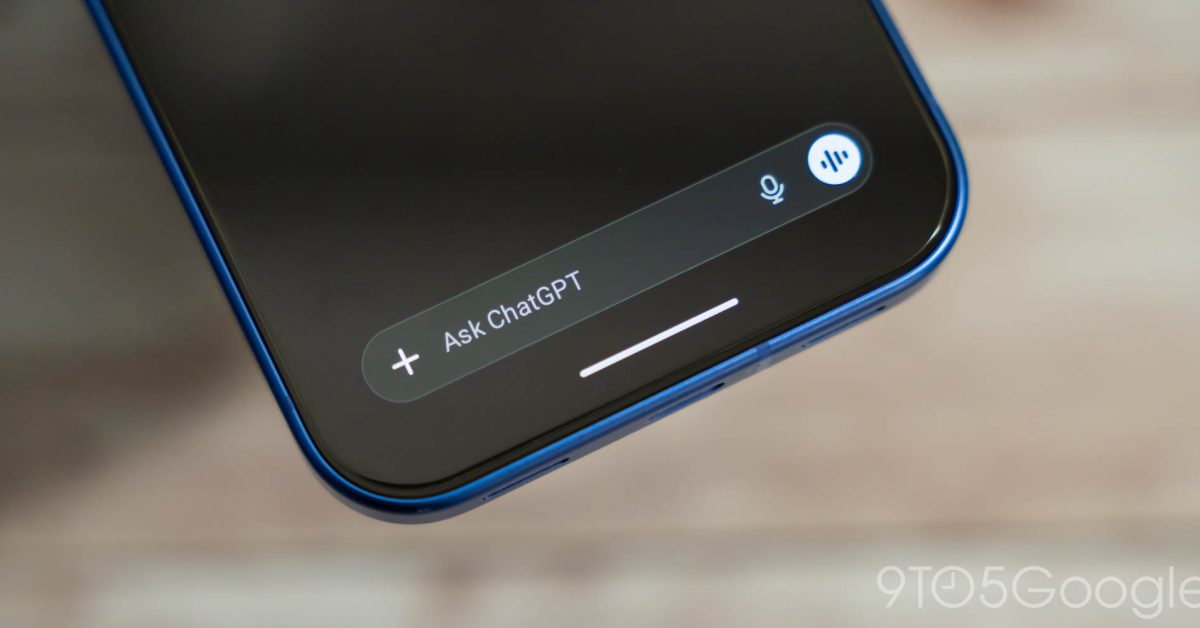




Tool of the Week: ChatGPT Images 2.6
OpenAI rolled out Images 2.6, a new image model that lets ChatGPT turn a text prompt or an uploaded photo into an animated GIF. Once it’s made, you can speed it up or slow it down, edit individual frames and share it. Before this, ChatGPT couldn’t make a GIF in one step. OpenAI says image generation is also faster now. It’s available to all ChatGPT users on web, desktop and mobile, so free accounts get it too. Developers get two new API models: one built for speed, one for quality.
AI-generated image of the week
We had to test out ChatGPT’s new ability to make GIFs. Now we can finally show what it’s like to be in one of our Drake University classes.

Prompt: Make a GIF of the two men dancing in front of a lecture hall full of studentsWhat we found

Wondering how data centers fared in last week’s U.S. elections? The website Data Centers on the Ballot tracks results for every local ballot measure about data centers in the US from the November 3, 2026 election. The winning side this year was restricting data centers. Restrict has won 44 of the 45 measures with complete counts.
AI term of the week
Small language model (SLM): A compact AI model designed for a narrower range of tasks than general-purpose models like GPT or Claude. “Small” is relative: these models can still have billions of parameters (the settings learned during training), just far fewer than the largest models. If an LLM functions like a Swiss army knife, an SLM is more like a paring knife: it can’t do everything, but it’s often all you need for a specific job.
The appeal of SLMs is practical. Small models are typically cheaper, faster, and sometimes compact enough to run directly on a laptop or phone, keeping sensitive data on your device rather than in a distant data center. The trade-off is less capability on complex, open-ended tasks. But for focused jobs like summarizing documents, sorting support tickets, or powering an app feature, they can be a great fit. For many everyday business tasks, bigger isn’t necessarily better, it’s just more expensive.
Miss out on any previous AI terms of the week? Check out our Glossary of AI terms, where we’re collecting all entries in the series. And if you want us to define a term in an upcoming newsletter, let us know!
Who are the Innovation Profs?
The Innovation Profs are Drake University Professors Chris Porter and Chris Snider. Porter leads Drake’s Artificial Intelligence major and Snider is a multimedia professor in the School of Journalism and Mass Communication.
